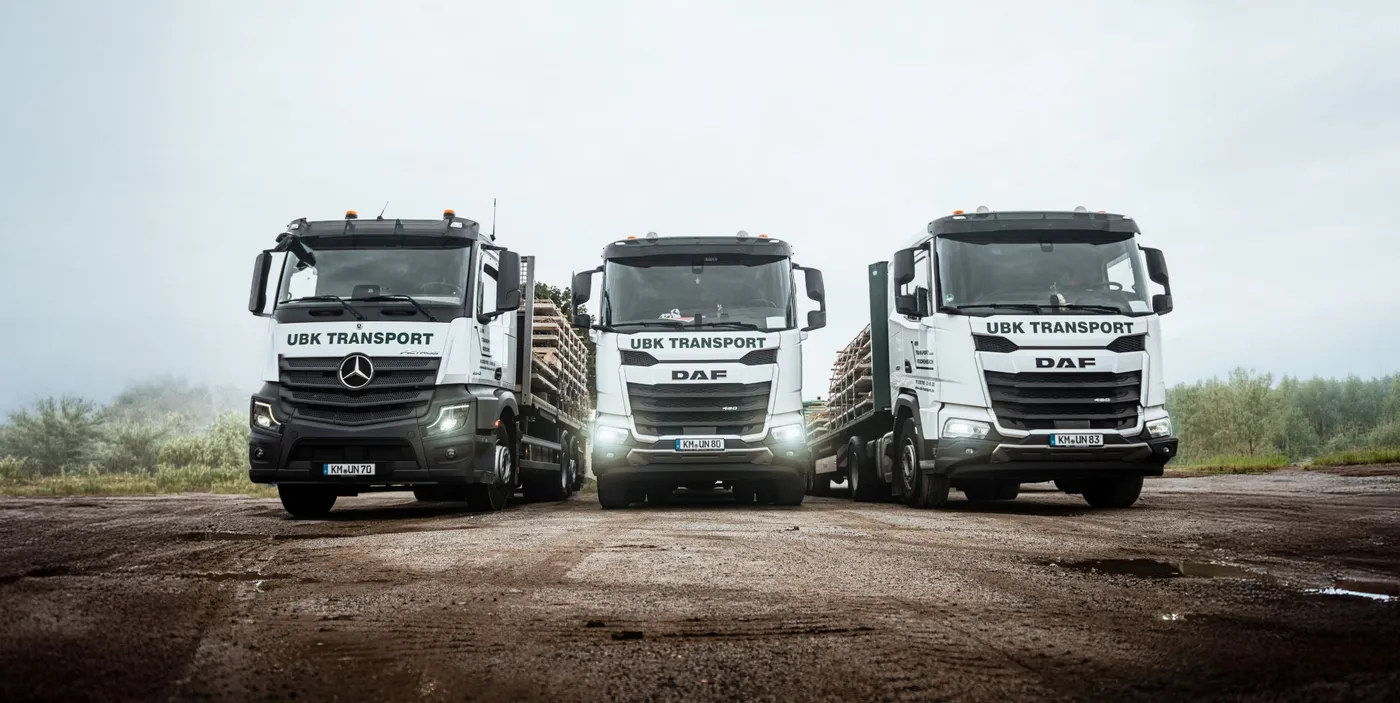
Two days ago, a client called me. Two new construction sites are to be photographed, and several trucks will also be parked in the company yard, which the client would like photographed for the new website. So actually a pretty typical job from my work as a business and reportage photographer.
And yet that’s where my first consideration begins: what do I take along?
With jobs like this, I never know exactly what to expect beforehand. Of course, it’s primarily about the buildings, construction sites and vehicles. But maybe there will also be a chance to photograph employees at work. I usually decide that spontaneously on site. I look at the situation, at how the employees are dressed and whether it could make an authentic, good subject. On construction sites in particular, workwear is of course often determined by occupational safety and the company’s rules. That’s simply part of the company’s reality, too – and therefore part of the reportage.
My gear for the job
Two cameras definitely come along. That’s standard for me by now, simply so I’m not suddenly left without a camera if there’s a technical problem.
As my main lens, I’m taking my 24–70mm this time. For architecture, finished buildings and the trucks, it gives me enough flexibility to capture different perspectives without constantly changing lenses. Why this zoom is in my bag at all, even though I usually work with prime lenses, I’ve written down here.
For possible employee portraits, I’m also packing my Sigma 50mm f/1.4. With it, I can separate people nicely from the background and work with a very wide aperture, too.
I’m also taking my relatively new 16mm f/1.8. For architecture and on construction sites in particular, a wide angle like this can be interesting. Maybe I won’t need it at all – but maybe there will be exactly that one situation in which I’m glad I can go even wider.
My tripod comes along as well, because I feel like trying out a little construction-site freeze for once. That is, a longer exposure in which movement and the atmosphere of the site become visible. And while packing, it occurs to me: the ND filter! I almost forgot it. So I quickly pack the 77mm ND filter, too.
Add to that a small flash, a small light stand and an umbrella. No big lighting setup – there simply isn’t time for that on a job like this, and it wouldn’t be necessary anyway. But I want to have the option of spontaneously trying a small lighting idea if something comes up on site.
Everything longer than 85mm, on the other hand, stays at home. A 135 probably wouldn’t do much for me on this job and would just be extra weight.
And then off we go
That’s how I pack my bag for almost every business or reportage job: I go through various possible situations in my head and try to prepare for them without loading the entire studio into the car.
Because that’s exactly what makes business photography in the Bautzen, Dresden, Hoyerswerda and Upper Lusatia area exciting for me. I know roughly what I’m supposed to photograph – but not necessarily which situations will actually arise on site.
Maybe in the end the best pictures won’t come from the planned shots of the buildings or trucks at all, but from somewhere in between. An employee at work, a detail on the construction site, an interesting perspective or simply a moment that wasn’t planned.
And it’s exactly these situations that make good corporate reportages for me: not just presenting the company nicely, but showing how people actually work there.
Now I’m curious what awaits me on the construction site and which pictures will end up on the memory card.
Pictures of your company?
Whether construction site, vehicle fleet, production hall or team: how a shoot works and what it costs is on the business photography page. One example from practice is the reportage at UBK Tiefbau.